Construction
Construction Progress Recorder
Dated, geotagged, structured photo evidence of build progress — documentation that stands up in a payment dispute.
The problem is proof, not photos
Construction sites generate thousands of photos and almost no evidence. Pictures live in personal camera rolls and chat threads — undated in practice, unlocated, unordered, and unattached to the contract line they should support. When a payment milestone is questioned or a defect dispute surfaces two years later, the photos exist but prove nothing: nobody can say with confidence when they were taken, where, or whether they were edited. The gap between “we have photos” and “we can prove it” is where contractors lose money.
Evidence by construction
Every capture is structured at the moment it happens, because provenance cannot be added retroactively:
- Timestamp and location sealed at capture, from device sensors, not user input
- Each photo bound to a project, zone, and work package — chosen in two taps from the project’s own structure
- A cryptographic hash recorded per image at capture time; edits create new versions, originals are immutable
- Capture works fully offline; the sealed record uploads when the site gets signal, with the capture time — not the upload time — as the fact
The result is a chain of custody a quantity surveyor, adjudicator, or insurer can follow: who captured what, where, when, and that nothing was altered since.
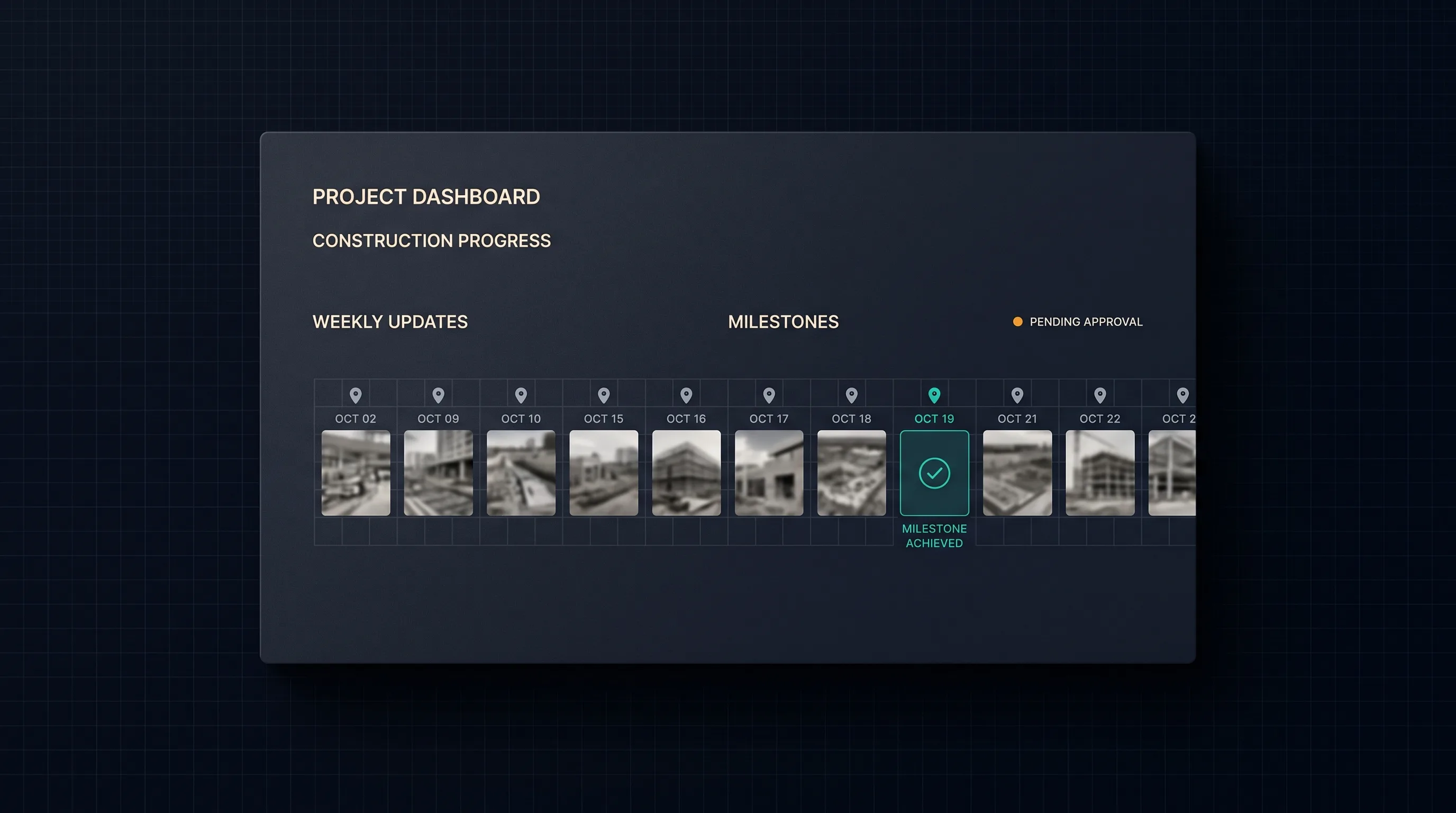
The review side
The web console assembles evidence the way it gets used: as a timeline per zone or work package, as a milestone dossier (“everything supporting invoice line 14”), and as an export — a signed PDF bundle with hashes and a verification page — that can be handed to a client or lawyer without the recipient needing the product. Progress becomes comparable: the same stairwell, photographed weekly from the same marked positions, tells its own story.
Deliberately light on AI
Evidence tooling and generative AI sit uneasily together, and this concept keeps them apart. The record pipeline — capture, seal, store, export — contains no machine inference at all. AI appears in exactly one optional place: suggesting tags and work- package matches for a photo, which a person confirms or ignores; suggestions are stored as suggestions, never as facts. No AI-written descriptions, no generative enhancement, no automated progress percentages. In a dispute, “the software guessed” is a sentence that must never need saying.
Prototype scope
One project template, structured capture with sealing and offline sync, and the milestone dossier export. Multi-party access (client, subcontractor) and drone or 360-camera ingestion are expansions, not foundations.
Evaluation plan
- Capture overhead: seconds per structured photo versus a bare camera shot — target budget under ten; site staff will not pay more than that for provenance
- Coverage discipline: do weekly zone walks actually happen without enforcement, or does the tool need scheduled capture prompts?
- Evidence quality review: a construction lawyer and a QS assess sample dossiers against real dispute standards — the concept’s true acceptance test
- Tag-assist honesty: acceptance rate of AI-suggested work-package matches, and whether wrong suggestions erode trust in the rest of the record